
A New Provider Must First Answer One Question: ‘Why Another One?’
The number of new studios grows every year, making it increasingly difficult for newcomers to explain their value to the market.
Unwanted Games points to the downside of how accessible game development has become: a company that appears fast can disappear just as quickly. If a new supplier releases yet another reskin of an already successful product, online casinos and aggregators have no obvious reason to add it to their catalogues. That is why a young provider's scarcest resource today is not just money or production capacity. It is a reason to be noticed.
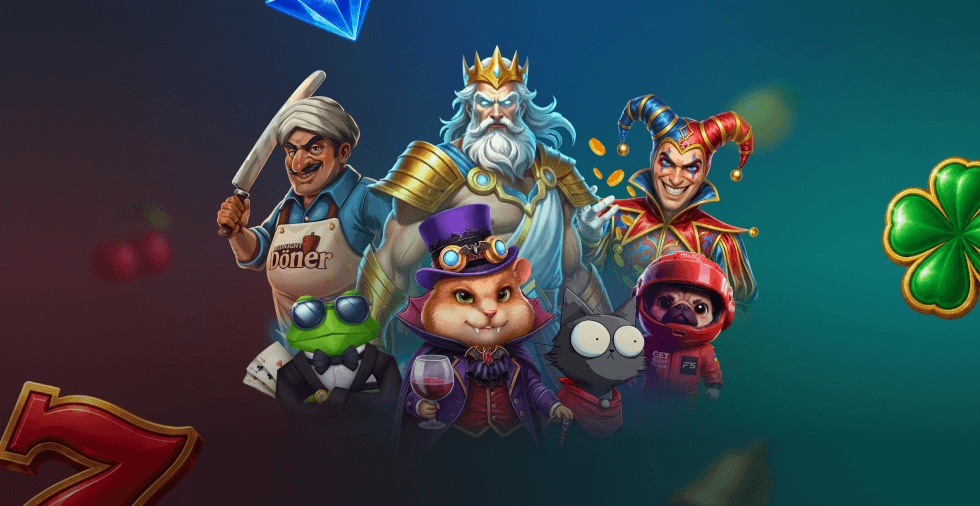
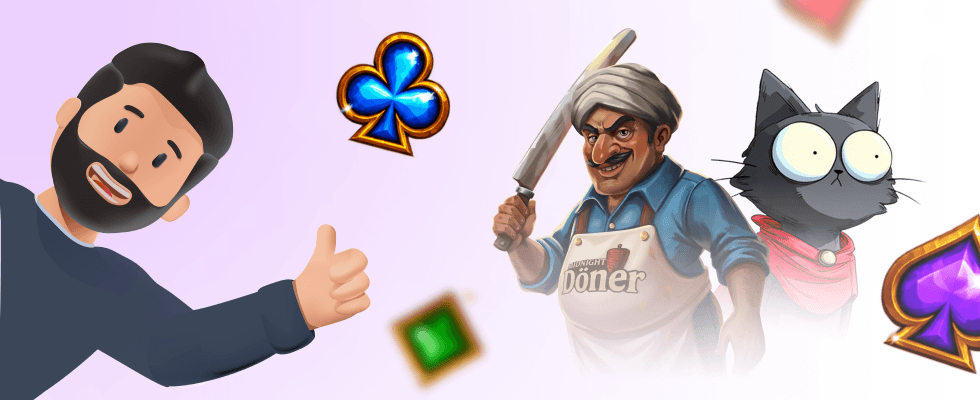
Unwanted Games looks for that reason in themes other studios often avoid. The studio deliberately moves away from Ancient Egypt, Zeus, and other familiar settings towards humour, absurdity, and provocation. Midnight Döner, with its colourful kebab vendor, is one example of this approach. For the company, this distinctive character extends beyond the game itself and carries through to its marketing.
Formula Spin takes almost the opposite approach. Here, something new does not necessarily mean a new theme. Sky of Olympus and Book of Maat draw on mythology and Ancient Egypt, both long familiar to the industry, but stand out through their execution: animation, the pace of bonus rounds, and the overall feel of the game. In its Prime Fruits series, the company uses another form of differentiation: one core model scales from 5 to 100 paylines, allowing the format and volatility to be tailored to a particular audience.
MEGAFAIR does not treat the new and the familiar as opposites either. Atlantis Coins Hold&Win uses a well-known mechanic and a popular theme but focuses on the quality of execution. The game was shortlisted for Best Slot Game 2026 at the SiGMA North America Awards. In other products, the company places greater emphasis on storytelling, sound, and characters. Moonie the cat has already appeared in Cat Cross and Moonie Tower, and the team is working on a third game featuring the character.
Riddec Games explores the boundary between familiar mechanics and new visual settings. In Orbital Rush, the studio retained CrossyRun's straightforward, step-by-step risk-based mechanic but moved the action into space instead of using the usual setting for the category. The concept was tested with players before release.
So, for a young provider, being ‘new’ does not necessarily mean inventing a genre. It might mean a theme, a format, a technical solution, a visual style, a variation on a familiar mechanic, or a different way of working with the audience.
Experimenting Is Possible, But Getting Players to Return Is Harder

Despite young teams' desire to stand out, the market remains fairly conservative.
MEGAFAIR points out an obvious fact: open almost any casino, and you will see just how firmly fruits, coins, Egyptian themes, and other familiar motifs have held their ground. This is not simply a lack of imagination in the industry. Familiar models continue to work.
The company experiments well beyond classic slots. Its portfolio includes the skill-based games Mega Bingo and Mega Solitaire, which partners have used at the top of their acquisition funnels, helping them significantly reduce acquisition costs. It also offers crash and instant games, as well as Crazy Zeus Run, a hybrid of a board game and a slot that was nominated for Most Innovative Slot Game and Best Game Design of the Year at the 2025 European iGaming Awards.
But MEGAFAIR acknowledges that being unusual does not guarantee retention. A player might try a new format out of curiosity and never return. This is why most of the market continues to produce online slots, and why one of a developer's key tasks is to strike a balance between a familiar gaming experience and enough features to make it different.
Riddec Games arrived at a similar balance by a different route. During its first year live, the studio released 22 games, 18 of them slots. It began with classic 5×3 formats and fruit-themed titles, then added 3×3 layouts and cascading mechanics. Here, experimentation does not replace models players already know. It gradually expands on them.
The Cost of a Good Game Has Risen — and Not Because of Development Costs
One of the most significant changes in the market in recent years has taken place outside the games themselves.
A MEGAFAIR representative who has worked on the provider side for around five years notes that commissions have fallen significantly over that period. Supply has grown, competition has intensified, and the economics of entering the market have changed with it. Lobby placement has become a particularly expensive resource.
This creates a paradox: a studio can spend months investing in game mathematics, UX, graphics, sound, and marketing, only to offer the resulting high-cost game on extremely favourable terms simply to get it in front of players.
As a result, competition today is no longer just between games. Providers also compete on integration speed, commercial terms, localisation, support, and their ability to adapt quickly to the requirements of a particular market.
Formula Spin notes that just two years ago, technical details often came up after discussions about the game itself. Now, operators often ask about API integration speed, localisation timelines, and compliance with regulated-market requirements from the very start.
For MEGAFAIR, one response has been to work through aggregators, since direct integrations are expensive and time-consuming. Important milestones for the company this year have included launching on SOFTSWISS, GR8_TECH, SoftGamings, and PIN-UP. In other words, today's game provider sells operators more than just content.
A Good Game Is the Entry Ticket, Not the Whole Deal
This point comes through particularly clearly in the responses from all four companies.
Formula Spin explains it simply: quality can surely get operators interested, but it’s basically still not a guarantee that they will take the games and include them in their lobbies. A few spins are enough for an operator to judge the quality of a product. After that, the focus shifts to the partner itself: how easy it is to integrate, how quickly the team responds, and how well its commercial terms reflect the reality of being a young brand.
MEGAFAIR focuses on reducing risks and having a clear ROI. For operators, it is not just about the game itself. They also need a reliable team that can adjust settings for local markets, adapt promotional mechanics, and respond quickly to requests.
Riddec Games aims to turn its small team size into precisely this kind of advantage. The studio relies on customer development, long interviews and comments from real players, and it can put what it hears into its games faster than bigger studios. Partners can also request a free branded game.
This is where one of the real advantages of a small studio over a large one emerges: it may not be able to offer operators a bigger catalogue or a better-known name, but it can potentially give more attention to a specific need.
The Faster the Market Develops, the Faster Novelty Fades
There is another problem: competitive advantages now have a very short shelf life.
According to Formula Spin, a feature or mechanic that seemed new a year and a half ago may already be seen as a basic expectation today. That pushes studios to develop games faster and come up with their own mechanics instead of relying on licensed or copied ones.
Riddec Games releases at least one new game every month, and as they do it, they also gradually introduce new mechanics. The studio also adjusts its plans based on partner requests, analytics, and changing demand in different markets. But even if the studio’s working fast in that direction and changes things, it does not mean they just start from scratch every single time. Sometimes, it is better to see what has already worked and build on it then.
This is how the Hamsterpunk series emerged. After the character’s debut and Hamsterpunk Mines, the hero got a series of its own, with Christmas and Valentine's Day versions followed by a Halloween-themed instalment. For a young brand, seasonal releases offer another chance to appear in themed game selections while making an already recognisable character more familiar to players.
Competitors Who Benefit When Their Rivals Survive
Perhaps the most interesting paradox of this young market lies here. These companies compete for the same operators, integrations, and lobby positions. But the complete disappearance of other small suppliers is not necessarily good for the winner.
Formula Spin sees excessive concentration as a risk to the industry: if a handful of studios control most of the lobby, operators have less negotiating power, players encounter the same mechanics more often, and studios have fewer chances to experiment.
MEGAFAIR has a similar view on cooperation and says that one provider’s success does not mean others immediately lose. Basically, strong products help the market grow, and competition makes studios develop new ideas faster and pay more attention to what players think and need.
MEGAFAIR understands why operators give most of their lobby space to games that already perform well. However, they also do keep around 20% of that space for new studios and fresh mechanics & ideas. This would give operators a chance to try something new and still not take too many risks.
This is not a call to replace established leaders with newcomers. Rather, it raises the question of how much room the industry is willing to leave for the next generation of potential hits.
Not More Content, but More Choice
In a few years, today's largest providers will most likely still occupy the top rows of casino lobbies. Young studios do not dispute that familiar games, mechanics, and brands give operators the predictability they need. But the four companies show, in different ways, why there is room for newcomers alongside them.
Unwanted Games goes where the risks may be too high for larger brands. Formula Spin counts on flexible products, speed and technology that adapts easily. Formula Spin counts on flexible products, speed and technology that adapts easily. Riddec Games tests its games with real players, develops its own game series, and improves its mechanics with each new release.
A crowded market does not automatically mean it has no need for new slot games. Rather, it changes the question every new provider has to answer. Saying ‘We have good slots too’ is not enough. A studio needs to explain what additional choice it gives operators and players simply by being there.
Perhaps this is where the real line between oversaturation and healthy competition lies. The market does not need another provider just to add another hundred similar games. But it still needs studios that put something in the lobby that would not be there without them.